
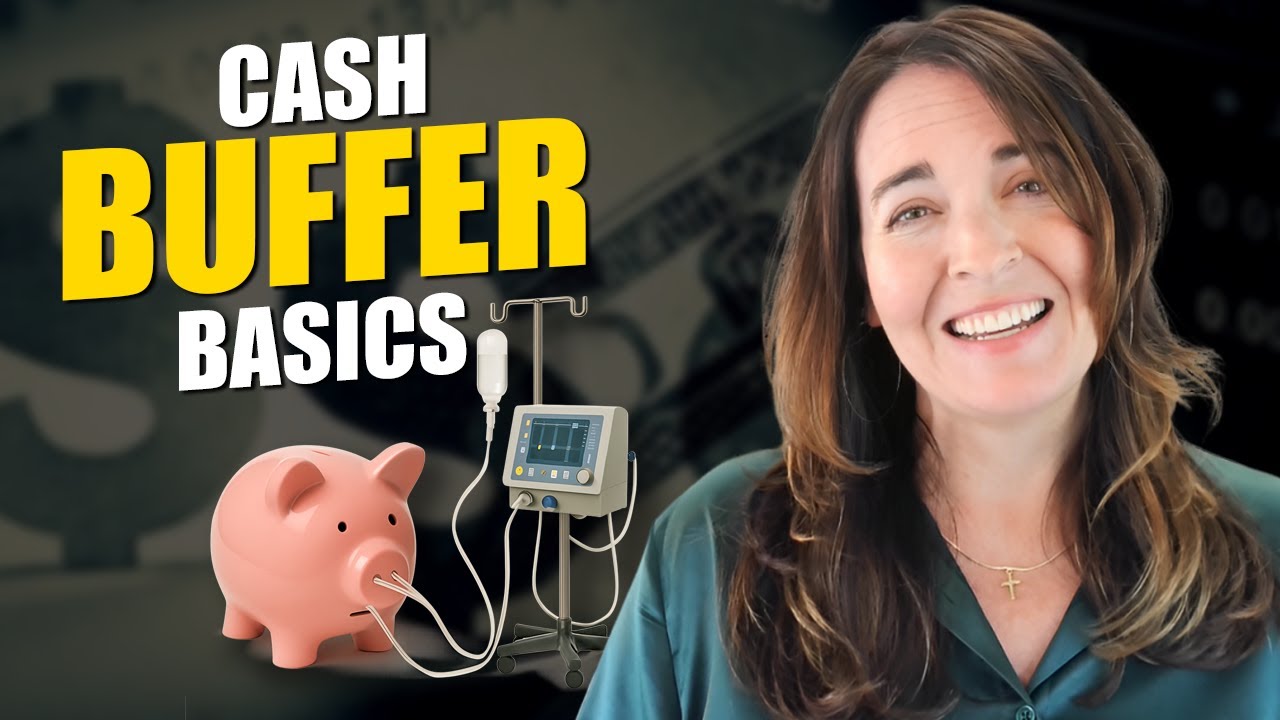
If you’ve ever laid awake at night worrying about whether you have enough cash to cover next month’s expenses, you’re not alone. That knot in your stomach when a big client payment runs late, or when you realize a slow month could put everything at risk—that’s one of the most common and stressful experiences business owners face. It’s completely normal to feel anxious about cash flow, especially when you’re responsible not just for your own livelihood but potentially for employees, vendors, and the future you’re trying to build.
Many business owners tell us they feel caught between conflicting pressures: you need cash on hand for security, but you also need to invest in growth, equipment, marketing, and operations. When money is tight, it’s hard to know whether you should be building reserves or pushing forward. That uncertainty is exhausting, and it can make every financial decision feel like a high-stakes gamble. We understand that stress because we’ve worked with hundreds of business owners navigating exactly these challenges.
Why Does Running Out of Cash Feel Like Such a Constant Threat?
This fear isn’t irrational or a sign of poor management—it’s a realistic response to how unpredictable business can be. Revenue fluctuates. Clients pay late. Unexpected expenses appear out of nowhere. A piece of equipment breaks. A key employee needs time off. A seasonal slow period hits harder than expected. These aren’t failures on your part; they’re simply the reality of running a business.
Here’s what makes cash flow stress particularly intense: unlike many other business problems, running out of cash is both immediate and potentially catastrophic. If your marketing underperforms, you have time to adjust. If a product launch disappoints, you can pivot. But if you can’t make payroll or pay critical vendors, you’re facing an existential crisis right now, today.
This is why that single slow month feels so threatening. When you’re operating without adequate cash reserves, you’re not just running a business—you’re essentially on a countdown timer that resets with every payment you receive. One delayed check, one unexpected expense, one month of softer sales, and suddenly you’re scrambling for solutions.
The hidden costs of operating without reserves:
- Making desperate decisions under pressure (taking bad loans, cutting essential services)
- Constant stress that affects your health, relationships, and decision-making ability
- Inability to take advantage of opportunities because you can’t access the cash
- Damage to vendor relationships when you can’t pay on time
- Loss of negotiating power because everyone knows you’re cash-strapped
- Missing growth opportunities because you’re always in survival mode
You deserve to run your business from a position of stability rather than constantly reacting to cash emergencies. That stability starts with building appropriate reserves.
What’s the “Right” Amount of Cash to Keep in Reserve?
It’s frustrating when you’re looking for a clear answer and the honest response is “it depends”—but in this case, it genuinely does depend on your specific situation. There’s no one-size-fits-all number because businesses face vastly different realities. A consulting firm with predictable retainers has different needs than a construction company with lumpy project payments and significant upfront costs.
That said, here’s a practical framework to work with:
Minimum baseline: As a general rule of thumb, at least one month of operating expenses. This is your absolute floor—the minimum buffer that gives you breathing room when things don’t go perfectly. Calculate your true monthly operating expenses (we’ll talk about how to do this accurately in a moment), and aim to keep at least that amount in accessible cash.
Standard target: Three months of operating expenses. For many businesses, three months of operating expenses is a solid target for sustainable operations. Three months gives you enough cushion to weather a slow period, handle delayed payments, or navigate unexpected challenges without making panic-driven decisions. It’s not hoarding—it’s building resilience.
Specific considerations that might push you higher:
- Revenue volatility: If your monthly income swings wildly (seasonal businesses, project-based work, industries with economic sensitivity), you need more reserves to smooth out the peaks and valleys
- Long receivables: If you wait 60, 90, or more days to get paid after delivering work, you’re essentially financing your clients’ operations—you need reserves to bridge that gap
- Growth phase: Rapid growth is expensive and often precedes revenue increases, so you need extra cash to fund expansion without choking on your own success
- Limited access to credit: If you can’t easily get a business line of credit or loan, reserves are your only safety net
- High fixed costs: Businesses with significant lease obligations, equipment payments, or large payrolls need bigger buffers
According to the U.S. Small Business Administration, cash flow problems and inadequate cushions are among the most common financial issues that contribute to small businesses failures, especially during slow periods or unexpected events.
The goal isn’t to have so much cash sitting idle that you’re missing opportunities. It’s to have enough that a normal business challenge doesn’t become a business-threatening crisis.
How Do I Calculate My True Monthly Operating Expenses?
You’re not alone in feeling uncertain about what should actually count as monthly operating expenses. Many business owners significantly underestimate this number, which leaves them with inadequate reserves even when they think they’re protected. It’s understandable—some expenses are obvious and monthly, while others are periodic or easy to forget until they’re due.
Here’s how to get an accurate picture of what you actually need to operate each month:
Start with the obvious fixed costs:
- Rent or mortgage payments for business space
- Utilities (electric, water, internet, phone)
- Insurance premiums (averaged monthly if paid annually or semi-annually)
- Regular loan or equipment lease payments
- Software subscriptions and technology costs
- Payroll including your own compensation
- Payroll taxes and benefits
Add the variable but essential costs:
- Cost of goods sold or materials needed for operations
- Shipping and fulfillment costs
- Marketing and advertising spend
- Professional services (accounting, legal, consultants)
- Maintenance and repairs
- Vehicle expenses if business-related
Don’t forget the periodic expenses averaged monthly:
- Annual licensing and permits (divide by 12)
- Professional memberships and subscriptions
- Estimated quarterly tax payments
- Equipment replacement or upgrade budgets
- Professional development and training
Include a buffer for unexpected expenses:
- Equipment breakdowns
- Emergency repairs
- Regulatory compliance costs
- One-time professional services needs
Here’s a real example: You might think your monthly expenses are $15,000 (rent, payroll, utilities, materials). But when you factor in your $3,600 annual insurance premium ($300/month), quarterly taxes averaging $4,000 ($1,333/month), annual software renewals ($1,200 or $100/month), and occasional professional services, your true monthly operating expense is closer to $17,000-$18,000. That difference matters significantly when calculating reserves.
This isn’t busywork—it’s the foundation of knowing how much security you actually need. Once you have this accurate number, you can set meaningful reserve targets instead of guessing and hoping.
What If I Can’t Afford to Build Reserves Right Now?
This is probably the most common concern we hear, and it’s completely understandable. When you’re already struggling with cash flow, being told you need to somehow set aside months of expenses can feel impossible—even insulting. If you had extra cash lying around, you’d already be building reserves. The question isn’t whether you should, it’s how you possibly could.
First, let’s acknowledge the reality: if your business is genuinely operating at a loss or barely breaking even month after month, building reserves isn’t your immediate priority. Survival is, though even setting aside very small amounts can still be helpful while you focus on fixing the underlying profitability issues. In that situation, you need to address the fundamental profitability issue first—whether that means raising prices, cutting costs, changing your business model, or honestly evaluating whether the business is viable in its current form.
But for most businesses, the challenge isn’t profitability—it’s that every dollar coming in immediately goes back out to cover operations, growth initiatives, or owner compensation. You’re not losing money; you’re just not capturing any either. If that’s your situation, here’s a more realistic approach:
Start impossibly small: You don’t need to fund three months of reserves by next Tuesday. Start with $500. Then $1,000. Then $2,500. Every bit creates a slightly bigger buffer between you and desperation. Setting aside even $100 per week adds up to over $5,000 in a year.
Use windfalls strategically: When you get a bigger-than-expected payment, a tax refund, or close an unusually profitable project, resist the temptation to immediately spend it on growth or take it as owner compensation. Direct at least 50% to reserves.
Build reserves before building other things: It’s tempting to invest every spare dollar in marketing, equipment, or expansion. But those investments often increase your operating expenses and risk, making reserves even more critical. Build your cushion first, then invest in growth from a stable foundation.
Automate the process: Set up automatic transfers to a separate savings account the day after you receive regular client payments. Even if it’s small, automating removes the decision-making and temptation to skip it.
Celebrate milestones: When you hit one week of reserves, acknowledge it. Then one month. Then two. These aren’t trivial achievements—they’re fundamental changes to your business’s financial stability.
The stress you feel about not having reserves is real and valid. But feeling bad about it doesn’t fix it, and waiting until you “can afford it” usually means it never happens. You build reserves the same way you build any significant asset: slowly, consistently, and with commitment even when it’s uncomfortable.
Why Do Cash Reserves Matter More During Growth?
This seems counterintuitive, doesn’t it? When business is booming and revenue is increasing, that should be when you feel most secure, not when you need bigger reserves. But here’s what we’ve seen time and again: growth phases can be some of the most dangerous times for cash flow, and they often catch even successful businesses by surprise.
Revenue growth and cash availability don’t move in lockstep—in fact, they often move in opposite directions temporarily. Here’s why:
Growth requires upfront investment before revenue arrives: You need to buy more inventory, hire employees, increase marketing, upgrade systems, and expand capacity before you see the returns from those investments. You’re spending tomorrow’s revenue to capture today’s opportunities.
Customer acquisition costs hit immediately: That new customer might be worth $10,000 in lifetime value, but the marketing costs, sales effort, and onboarding work happen now while revenue trickles in over months or years.
You’re fulfilling more work with the same payment terms: If you typically wait 30-60 days to get paid, doubling your sales means you’re now financing twice as much work-in-progress and outstanding receivables.
Operational capacity often comes in lumpy chunks: You can’t hire half a person or lease half a space. Growth forces you to increase fixed costs in chunks that might initially exceed the immediate revenue increase.
This is why profitable, growing businesses sometimes face cash crunches that struggling businesses don’t. You’re being squeezed by your own success—funding today’s growth with cash you won’t collect for months. Adequate reserves give you critical runway to grow more sustainably and reduce the risk that your momentum stalls simply because you ran out of cash while executing a strategy that’s working on paper.
The businesses that scale most successfully aren’t necessarily the ones growing fastest—they’re the ones with enough cash reserves to fund growth without making desperate decisions when timing doesn’t work perfectly.
How Do Cash Reserves Change the Decisions I Can Make?
This is where cash reserves move from being a nice-to-have safety net to a genuine competitive advantage. When you have adequate reserves, you’re not just protected from disasters—you’re positioned to make better decisions across your entire business. Let’s talk about what changes when you’re operating from stability rather than scarcity.
You can negotiate from strength: Vendors know when you’re desperate for extended terms or delayed payments. With reserves, you can pay promptly or even early—often unlocking discounts, better terms, or priority treatment. You’re a preferred customer, not a payment risk.
You can say yes to opportunities: A chance to buy inventory at a steep discount, take on a large project that requires upfront costs, or invest in a timely marketing opportunity—these chances often come without warning and disappear quickly. With reserves, you can act on legitimate opportunities instead of watching them pass by.
You avoid panic-fueled bad loans: When you’re desperate for cash, you accept whatever terms you can get—high interest rates, unfavorable repayment schedules, personal guarantees that put your assets at risk. With reserves, you can wait for appropriate financing or avoid borrowing entirely.
You can maintain strategic priorities: Without reserves, a slow month means cutting marketing, delaying equipment maintenance, or skipping investments in your team. With reserves, you can maintain strategic consistency even when revenue temporarily dips, which actually helps you recover faster.
You protect relationships: Nothing damages professional relationships faster than missed payments or last-minute payment negotiations. Reserves let you be the reliable partner, employee, and vendor everyone wants to work with.
You reduce stress-driven mistakes: Decision-making quality deteriorates under financial stress. When you’re not operating in constant crisis mode, you make clearer, more strategic choices across hiring, pricing, customer selection, and business development.
You can be selective about clients: Financial pressure forces you to say yes to everyone, including problematic clients or unprofitable work. Reserves give you the freedom to politely decline work that doesn’t serve your business’s long-term interests.
Think about how much energy you currently spend managing cash flow, worrying about payments, and making decisions based on immediate cash needs rather than strategic priorities. Reserves don’t just protect you—they free you to run the business you actually want to build.
How Can We Help You Build Financial Stability Into Your Business?
If you’re tired of operating with that constant underlying anxiety about cash flow, we can help you develop a realistic plan to build reserves while still running and growing your business. At J.R. Martin & Associates, we work with business owners to understand their true operating expenses, identify opportunities to improve cash flow, and create sustainable strategies for building the financial cushion you need.
We know that advice to “just save more” isn’t helpful when you’re already stretched thin. What you need is a realistic assessment of your situation, strategic guidance on improving cash management, and a plan that acknowledges where you are today while building toward where you need to be. You don’t have to get there overnight, but you do need a plan—and you don’t have to create that plan alone.
We can help you calculate your true monthly operating expenses, identify opportunities to improve cash flow and profitability, establish realistic reserve targets based on your business model, create automatic systems for building reserves, and integrate reserve building into your overall financial strategy. Together, we can build a buffer between you and bad decisions, between you and things you cannot control.
You’re working too hard to constantly operate in survival mode. Let’s work together to create the financial stability that lets you make strategic decisions, seize opportunities, and sleep better at night knowing that a slow month or delayed payment won’t threaten everything you’ve built.
To discover whether one of our business packages would be right for you and schedule a conversation about building financial resilience into your business, check us out online at jrmartinscpa.com. You deserve to run your business from a position of strength, not from constant stress about the next payment.